
I started my entrepreneurial journey at age 42, was featured on a national television cooking show at age 44, published my first book with St. Martin's Press at age 50 - the same year I launched The Real Dish; got remarried to the love of my live at age 51 and stepped on a bodybuilding competition stage for the first time at age 53!After 40, I finally had enough clarity about what I actually wanted to say and who I wanted to be with — and enough confidence to do it without apology. The version of me that launched this platform could not have existed at 30. She needed the decades of experience, failure, learning, and becoming that preceded her.
I hear from women all the time who are sitting on something — a business idea, a creative practice, a career change, a relationship they want to leave or a life they want to build — and the thing stopping them is not logistics. It is the belief that they have missed their window. That 50 is too late to start something new.
I want to dismantle that belief completely. Not with platitudes, but with evidence, with stories, and with a clear-eyed look at what reinvention actually requires — and what it does not.
The average life expectancy for women in the US is now 79. If you are 50, you likely have three more decades ahead of you. That is not a footnote. That is a second act — and it can be the best one.
What the Research Says About Reinvention
The science of adult development has a concept called the "U-curve of happiness" — the finding that life satisfaction tends to dip in midlife and then rise again, often reaching its highest point in the 60s and 70s. This is not wishful thinking. It is a robust finding replicated across dozens of countries and cultures.
What drives the rise? Several things: a shift from external validation to internal values, a greater willingness to let go of what does not matter, deeper relationships, and — critically — a clearer sense of who you actually are and what you actually want. These are not things you have at 25. They are things you earn.
Research on creativity and innovation also challenges the "peak at 30" narrative. Economist David Galenson's work on creative careers found two distinct patterns: conceptual innovators who peak young, and experimental innovators who do their best work later — often in their 50s, 60s, and beyond. The experimental innovators are the ones who need decades of accumulated experience to synthesize something genuinely new. Many of the most important creative and entrepreneurial breakthroughs in history came from people over 50.
The Unique Advantages of Reinventing After 50
Reinvention after 50 is not the same as reinvention at 25 — and that is a feature, not a bug. Here is what you have that you did not have then:
Clarity about what you actually want
Decades of experience have taught you what energizes you and what drains you, what aligns with your values and what does not. The self-knowledge you have at 50 is genuinely rare and genuinely useful. Most 25-year-olds are still figuring out who they are. You know.
A network built over decades
The relationships you have cultivated over 30 years of professional and personal life are an extraordinary asset. Reinvention at 50 rarely means starting from zero — it means redirecting existing relationships, skills, and credibility toward something new.
Financial stability (often)
Not always, and not for everyone — but many women at 50 have more financial resources and fewer financial obligations than they did at 30. Kids are grown or nearly grown. Mortgages are further along. The risk calculus is genuinely different.
Freedom from others' opinions
One of the most consistent findings in research on midlife women is a dramatic decrease in the need for external approval. The exhausting performance of living up to others' expectations tends to loosen significantly after 50. You care less about what people think — and that is enormously liberating.
Resilience earned through difficulty
You have survived things. Losses, failures, disappointments, reinventions you did not choose. That survival is not just a story — it is a resource. You know you can handle hard things because you already have.
The Real Obstacles (And How to Work With Them)
Reinvention after 50 is not without real challenges. Pretending otherwise would be dishonest. Here are the ones I hear most often — and what actually helps.
"I don't know what I want"
This is more common than you think, and it is not a character flaw. After decades of meeting others' needs, many women genuinely do not know what they want for themselves. Start with what energizes you, not what you think you should want. What do you lose track of time doing? What problems do you find yourself drawn to solving? What did you love before you got busy being responsible?
"I'm too old to start over"
The "starting over" framing is the problem. You are not starting over — you are redirecting. Every skill, relationship, and piece of hard-won wisdom you have is coming with you. The question is not whether you have enough to start. It is what you want to build with what you already have.
"What if I fail?"
You might. Failure at 50 is survivable in a way it may not have felt at 30. You have a track record of surviving hard things. And the research on regret is clear: at the end of life, people regret the things they did not try far more than the things they tried and failed.
"I don't have the energy"
This one deserves to be taken seriously. If you are genuinely depleted — by perimenopause, by chronic stress, by years of over-giving — reinvention requires addressing the energy deficit first. Sleep, nutrition, movement, and hormonal support are not luxuries. They are the foundation that makes everything else possible.
How to Start: A Practical Framework
Reinvention is not a single decision. It is a series of small, consistent moves in a direction that matters to you. Here is a framework that works:
Name the pull
What is the thing you keep coming back to? The idea you have had for years, the skill you have always wanted to develop, the life you imagine when you let yourself imagine freely? Write it down without editing. This is your starting point.
Start before you are ready
Waiting until you have the perfect plan, the right credentials, or enough confidence is a strategy for never starting. Begin with a small, concrete action this week. Take a class. Have a conversation. Write the first page. The clarity comes from doing, not from planning.
Find your people
Reinvention is much harder in isolation. Find the community of people who are doing what you want to do, or who are in the same season of becoming. Their existence proves it is possible. Their company makes the journey less lonely.
Protect your energy ruthlessly
Reinvention requires energy. That means saying no to things that drain you, addressing the physical foundations of energy (sleep, nutrition, movement), and being honest about what you are carrying that you do not need to carry anymore.
Measure in months, not days
Real reinvention takes time. The women who succeed are not the ones who move fastest — they are the ones who keep moving. Consistency over intensity. Progress over perfection. One year from now, you will be grateful you started today.
The Bottom Line
The second half of your life is not a diminishment of the first. It is a different kind of richness — one that is only available to someone who has lived enough to know what actually matters.
The women I admire most are not the ones who peaked early and coasted. They are the ones who kept becoming — who stayed curious, stayed willing, and refused to let the culture's story about aging women become their own story.
You are not too late. You are exactly on time. The question is what you are going to do with the time you have.
The next chapter is waiting. Start writing it.
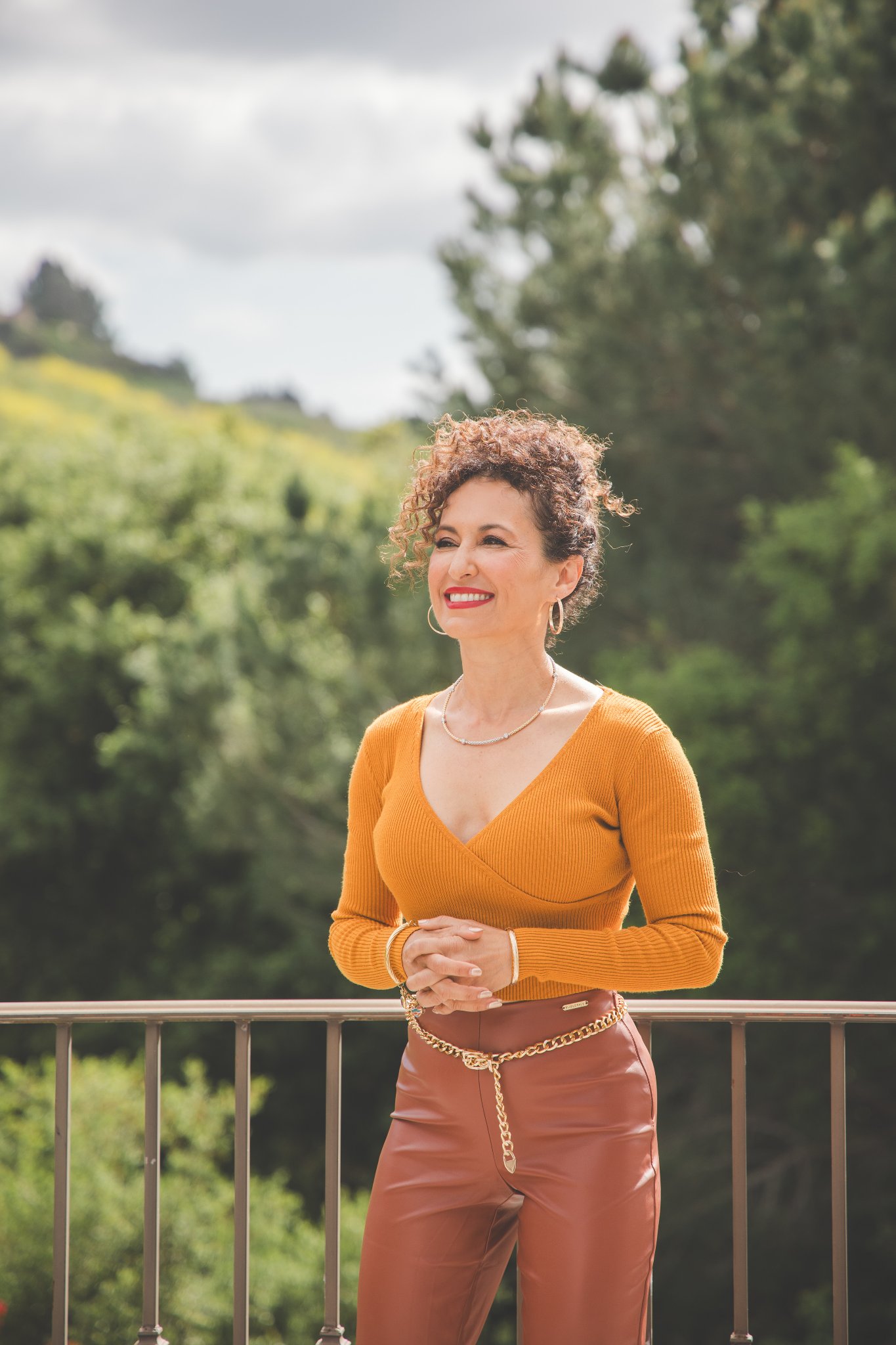
Mareya Ibrahim
Mareya is the founder of The Real Dish, a certified nutrition coach, and wellness advocate known as The Fit Foodie. She is the host of The Real Dish podcast and the author of Eat Like You Give a Fork. Her mission is to help women 40+ live their most vibrant, authentic lives.
Meet Mareya

